Fabbrimarine
Collagen Cream for Face
Fabbrimarine's two marine collagen face products — a daily lifting cream and a treatment sheet. What a collagen cream genuinely does for skin, and what it cannot.
Fabbrimarine's two marine collagen face products — a daily lifting cream and a treatment sheet. What a collagen cream genuinely does for skin, and what it cannot.
Collagen appears in two completely different kinds of product — creams you apply and powders you swallow — and they are routinely discussed as though they were the same thing. This page covers the topical side: what a collagen cream genuinely does for your face, which Fabbrimarine formulas actually contain marine collagen, and where the honest limits are.
Yes, for hydration and surface texture — but not for rebuilding the collagen deeper in your skin. A collagen cream works at the skin surface, where it binds water and supports the outer structure. That is a real, measurable effect you can see and feel. What it does not do is replace collagen lost in the dermis, and any product promising that is overselling.
The one matched to what your skin needs: a daily cream if you want hydration and firmness together, or a concentrated treatment sheet if you want a short intensive course. Fabbrimarine makes two genuinely collagen-based face products, and they do different jobs.
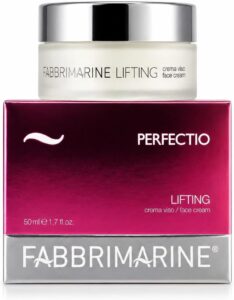
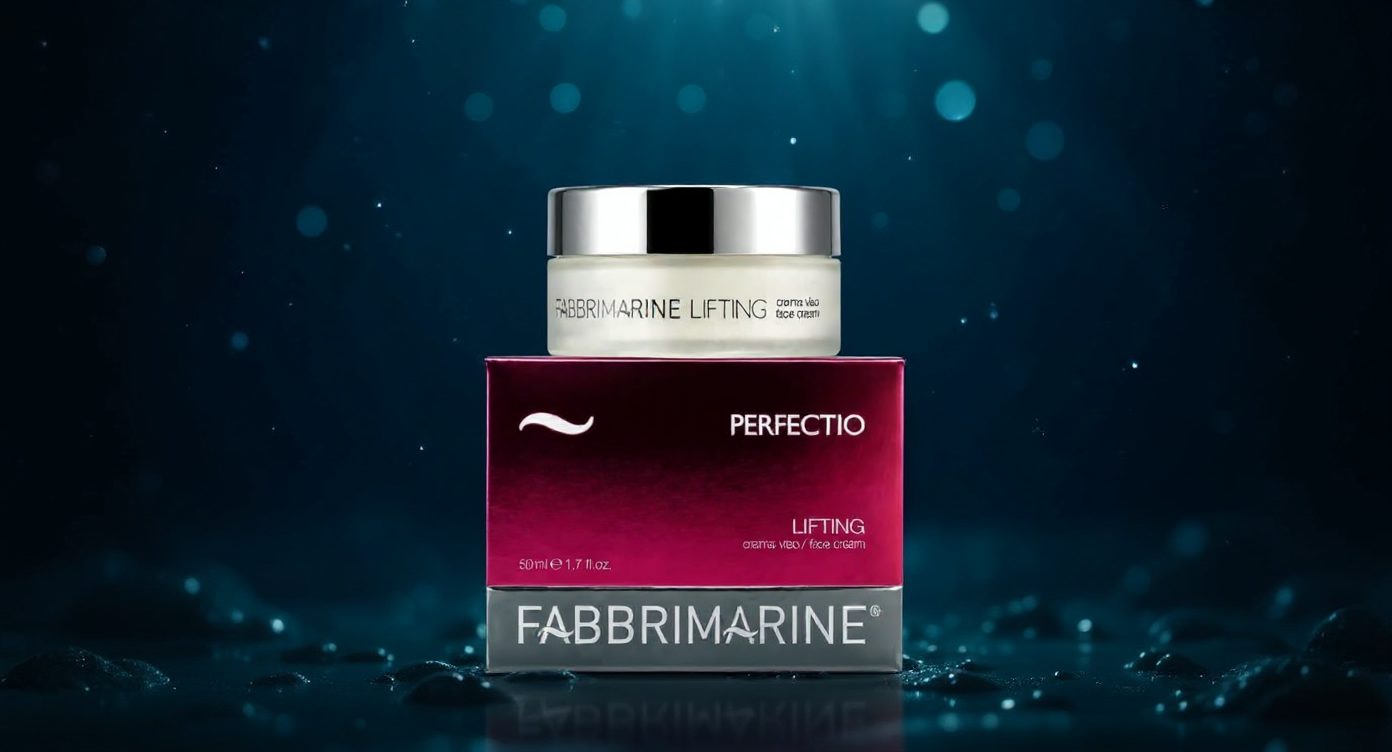
Lifting Face Cream Perfectio — a daily lifting cream with plankton, marine collagen and Vitamin F, for face, neck and décolleté. This is the everyday option, and the one to choose if you want collagen in a cream you actually use twice a day.
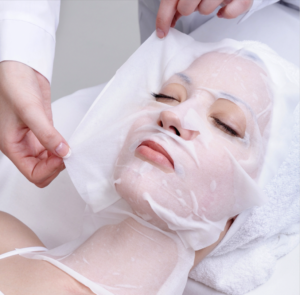
Vello Collagene Face — a dermocosmetic sheet with marine collagen and glycolic acid, used as a treatment rather than a daily step. The glycolic acid component means it also works on texture and tone, not hydration alone.
Worth saying plainly: these are the only two products in the range built on marine collagen. Other Fabbrimarine face products use different actives, and we would rather tell you that than let “marine” imply collagen everywhere.
A collagen cream, yes — morning and evening. A collagen treatment sheet, no. Lifting Face Cream Perfectio is formulated as daily care. Vello Collagene Face contains glycolic acid and is a concentrated treatment, so it belongs in a routine once or twice a week rather than every day, like any acid-containing format.
If you use both, the cream is your daily base and the sheet is the occasional intensive step — not both on the same evening.
These are different mechanisms, not competing versions of the same thing.
Ingestible collagen — powders, capsules, drinks — is broken down by digestion into amino acids before your body can use it. Whether that measurably increases collagen in your skin specifically, as opposed to anywhere else in the body, is genuinely debated in the research, and results vary a lot between people.
Topical collagen is applied where you want the effect. It supports surface structure and hydration directly, without depending on digestion or on where the body chooses to route the amino acids. More direct and more localised — and correspondingly more modest in what it can claim.
Using both is not contradictory. They simply do different things, and neither substitutes for the other. Fabbrimarine’s collagen products are topical; we do not make a supplement.
No, and it matters that nobody pretends otherwise. Collagen molecules are too large to pass deep through the skin barrier. This is well established, and a formulation claiming deep structural penetration is making a claim the molecule size does not support.
What topical collagen genuinely does is act as a humectant at the surface — binding water, smoothing texture, supporting the outer layer. That is why a collagen cream improves how skin looks and feels without rebuilding anything underneath.
Fabbrimarine’s broader formulation approach addresses absorption separately: every product’s water base is calibrated to the osmotic pressure of human skin so that the actives which can cross the barrier actually do. More on how that works.
Apply to clean, slightly damp skin after cleansing and toning. Damp skin matters — a cream holds existing water far more effectively than it adds water to skin that is already dry.
Morning and evening for the daily cream. Extend it to the neck and décolleté, which age visibly and are usually where routines stop. In the morning, give it a minute to absorb before sunscreen, or it will pill.
Expect comfort and hydration within days, and changes in firmness and texture over six to twelve weeks. That is how long skin takes to turn over and respond, regardless of the product.
More: face moisturizer range · anti-ageing · face masks · full face care routine