Fabbrimarine
Face Cleanser
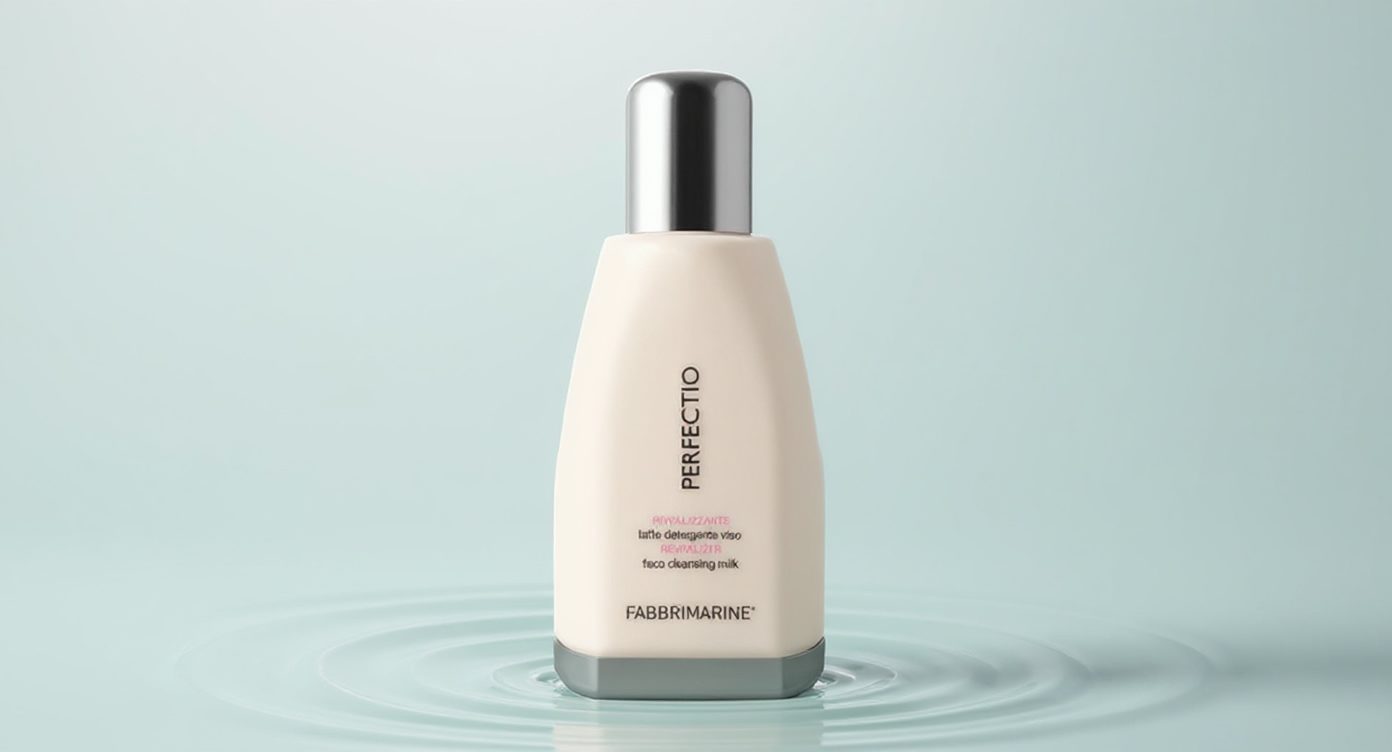
Italian marine face cleanser — a light emulsion that removes makeup and sunscreen without stripping skin. Why a cleansing milk beats a foaming wash in Gulf heat.
Italian marine face cleanser — a light emulsion that removes makeup and sunscreen without stripping skin. Why a cleansing milk beats a foaming wash in Gulf heat.
Cleansing is the first step in every routine and the one most often rushed. Get it wrong in either direction — too stripping or not thorough enough — and everything applied afterwards works less well.
A cleansing milk removes makeup, sunscreen and daily grime without disrupting the skin’s lipid barrier, which a sulphate-based foaming wash can. The tight, squeaky-clean feeling people associate with a thorough wash is usually the surfactant stripping that barrier — not evidence of better cleansing. A milk emulsion dissolves residue and rinses away without that trade-off.
Twice daily — morning and evening — and both serve different purposes. Evening cleansing removes makeup, sunscreen and a day of environmental exposure before your skin’s overnight repair. Morning cleansing removes the oil and residue that build up overnight from your pillow, hair products and the skin’s own repair processes, so your day products go onto clean skin rather than onto that.
This holds even if you wear no makeup. Skin accumulates sweat, sebum and airborne residue regardless, and in a climate where you move between dust, heat and air conditioning, that accumulation is not trivial.
No. Foam is a property of the surfactant, not a measure of how well something cleans. Many high-foaming washes clean effectively, but they do it by stripping more than is necessary for most skin. A non-foaming emulsion that dissolves oil-based residue — makeup and sunscreen are both oil-soluble — often removes more of what actually needs removing.
If your skin feels tight within a minute of rinsing, your cleanser is too aggressive for it, regardless of how pleasant the lather was.
Fabbrimarine’s product philosophy is built on Cosmetologia a Piani — Layered Cosmetology — the principle that results come from a precise sequence rather than any single hero product, with each step preparing skin to receive the next. Cleansing is where the sequence starts: incomplete cleansing leaves residue that measurably reduces how well a toner or serum absorbs afterwards. The full framework explains how this applies across a whole routine.
Apply to damp skin morning and evening. Massage gently in circular motions for 30 to 60 seconds — long enough to actually dissolve sunscreen and makeup, which a quick pass will not do. Rinse with lukewarm water: hot water strips more barrier than warm, and cold water does not dissolve oil-based residue effectively.
Follow immediately with a toner to lift any remaining trace and rebalance skin before serum or moisturizer.
Two things change here. Sunscreen is a daily product rather than a seasonal one, so evening cleansing has more to remove and genuinely needs the full 30 to 60 seconds. And because air conditioning dehydrates skin all day, a stripping cleanser compounds a problem the climate has already started — which is the case for an emulsion over a foaming wash in the Gulf specifically.
Next steps: toner · moisturizer · full face care routine
