Fabbrimarine
Eye Serum
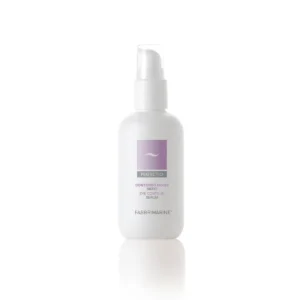
Perfectio Eye Contour Serum — formulated for the thinnest skin on the face. What an eye serum changes, what it cannot, and how to apply it without irritation.
Perfectio Eye Contour Serum — formulated for the thinnest skin on the face. What an eye serum changes, what it cannot, and how to apply it without irritation.
The skin around your eyes is the thinnest on the face, has the fewest oil glands, and moves constantly. It shows fatigue and dehydration before anywhere else — and it needs a product built for those conditions rather than a face cream applied further up.
An eye serum delivers lightweight, targeted actives to skin too thin and reactive for a standard face cream. Eye-area skin is a fraction of the thickness of cheek skin and carries far fewer sebaceous glands, so it dehydrates faster and shows fine lines earlier. A dedicated serum is formulated at a concentration and weight that area can tolerate.
You can, but a rich face cream is often too heavy for eye-area skin and can contribute to milia — small firm bumps that form when product sits in skin too thin to clear it. Active ingredients that your cheeks tolerate comfortably, such as higher-strength acids or retinoids, can also cause stinging or irritation in the orbital area.
If you only use one product, a gentle face cream patted lightly around the orbital bone is better than nothing. But it is a compromise, not an equivalent.
When you start noticing the concern, not at a particular age. There is no threshold birthday. Fatigue, puffiness and early fine lines show up at very different points depending on genetics, sleep, screen hours and sun exposure — and in a high-UV climate, often earlier than people expect.
A practical trigger: if the area looks tired when the rest of your face does not, or if fine lines are visible when your face is at rest rather than only when you smile, it is worth adding.
Use your ring finger. It applies the least pressure of any finger, which matters on skin this delicate.
Pat rather than rub, working along the orbital bone from the inner corner outward. Stay on the bone rather than going close to the lash line — product migrates toward the eye on its own as it warms, and starting too close is what causes stinging.
Apply before your face cream, not after. The lighter formula needs to absorb first; putting a richer cream underneath blocks it.
Worth being straight about this. A topical serum can improve hydration, the look of fine dehydration lines, and some puffiness. It will not remove dark circles caused by underlying vasculature or bone structure, and it will not resolve fat-pad changes under the eye — those are structural, not surface.
Dark circles from pigmentation, as opposed to shadowing, respond better over time. If yours look the same regardless of sleep, they are more likely structural.
Cleanse, tone, eye serum, then face cream. Morning and evening. In the morning, let it settle before sunscreen — the eye area is one of the most commonly under-protected parts of the face, and daily SPF does more for long-term appearance there than any serum.
More: face moisturizer · anti-ageing · sensitive skin · full routine