Fabbrimarine
Best Sunscreen for UAE and Gulf Weather
What to use in Dubai and UAE heat: SPF 30 minimum, SPF 50+ on the face. Why Gulf UV changes the answer, and which texture survives the humidity.
What to use in Dubai and UAE heat: SPF 30 minimum, SPF 50+ on the face. Why Gulf UV changes the answer, and which texture survives the humidity.
Gulf sun is not a European summer with the dial turned up. Higher UV intensity, far more hours of direct sun, and heat and humidity that make a heavy formula genuinely unpleasant to wear all day. The right sunscreen here is a different product from the one that works in Milan.
The best sunscreen for UAE weather is a broad-spectrum SPF 30 or higher in a light, fast-absorbing texture — SPF 50+ on the face, SPF 30 for face and body. In Gulf conditions, texture decides whether you actually reapply. A heavy cream you skip at midday protects you less than a lighter one you reapply on schedule.
SPF 30 is the minimum, and SPF 50+ is the right default for the face. Dubai’s UV index sits at 11 or above through the summer months — the band the World Health Organization classifies as “extreme,” where unprotected skin can burn in minutes. WHO guidance at that level is broad-spectrum SPF 30 or higher, generously applied, reapplied every two hours, with shade and covering up between 10am and 4pm.
This is also why we don’t apply the traditional European phototype ladder here. That system maps lower SPF to deeper skin tones, and it was built for European sun. Deeper skin burns less readily but is not protected from UVA — and melasma and post-inflammatory hyperpigmentation, the most common concerns we hear from UAE customers, are UVA-driven and most persistent in deeper tones.
Because most of them are not absorbing — they are sitting on the skin, and heat and sweat make that obvious. A formula that stays on the surface breaks up, migrates and shines once you add humidity and sebum. The same product can feel perfectly comfortable in a cooler, drier climate and unwearable here.
A sunscreen’s water base matters as much as its filter strength for how it feels. Fabbrimarine calibrates every product’s water carrier to the osmotic pressure of human skin, so marine actives cross the barrier instead of pooling on top of it. That is what prevents both the greasy feel and the white cast people associate with high-SPF products. How the water carrier works.
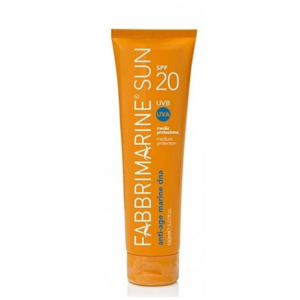
All four carry UVB filters together with short- and long-wave UVA filters, plus Marine DNA (bioplasma) and plankton-derived actives. Broad-spectrum coverage matters more than the SPF number on its own: SPF measures UVB, while UVA is what drives photoageing and pigmentation through the year, not just in summer.
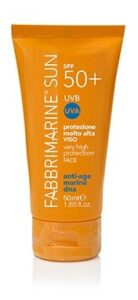
Facial skin is thinner, more visible and more prone to pigmentation, so it justifies the higher protection level and a lighter texture. The SPF 50+ is face-specific and sized accordingly at 50 ml.
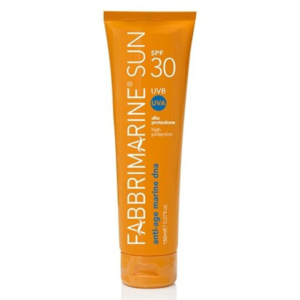
Body coverage needs volume more than it needs the maximum number, which is why the SPF 30 comes in 150 ml and is formulated for both. If you buy one product for the whole family, buy that one.
Beach or pool: every two hours without exception, and immediately after swimming or towel-drying — towel-drying removes more sunscreen than swimming does.
Outdoor work or sport: every two hours, more often with heavy sweating.
Air-conditioned office: you aren’t getting meaningful UV indoors, so a morning application plus a top-up before heading out again is reasonable. Late-afternoon summer UV is still significant, so include the evening commute.
Driving: side windows transmit UVA. Daily drivers take a measurable dose on the left arm and the left side of the face — the strongest argument for wearing SPF even on days you’re mostly indoors.
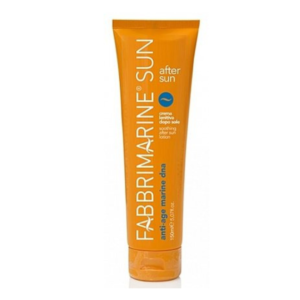
If oily or combination skin is your main concern, see our dedicated sunscreen for oily and combination skin guide. For children or reactive skin, see sunscreen for children. For aftercare, see after-sun care, or browse the full sun care range.